2026 Write for Rights
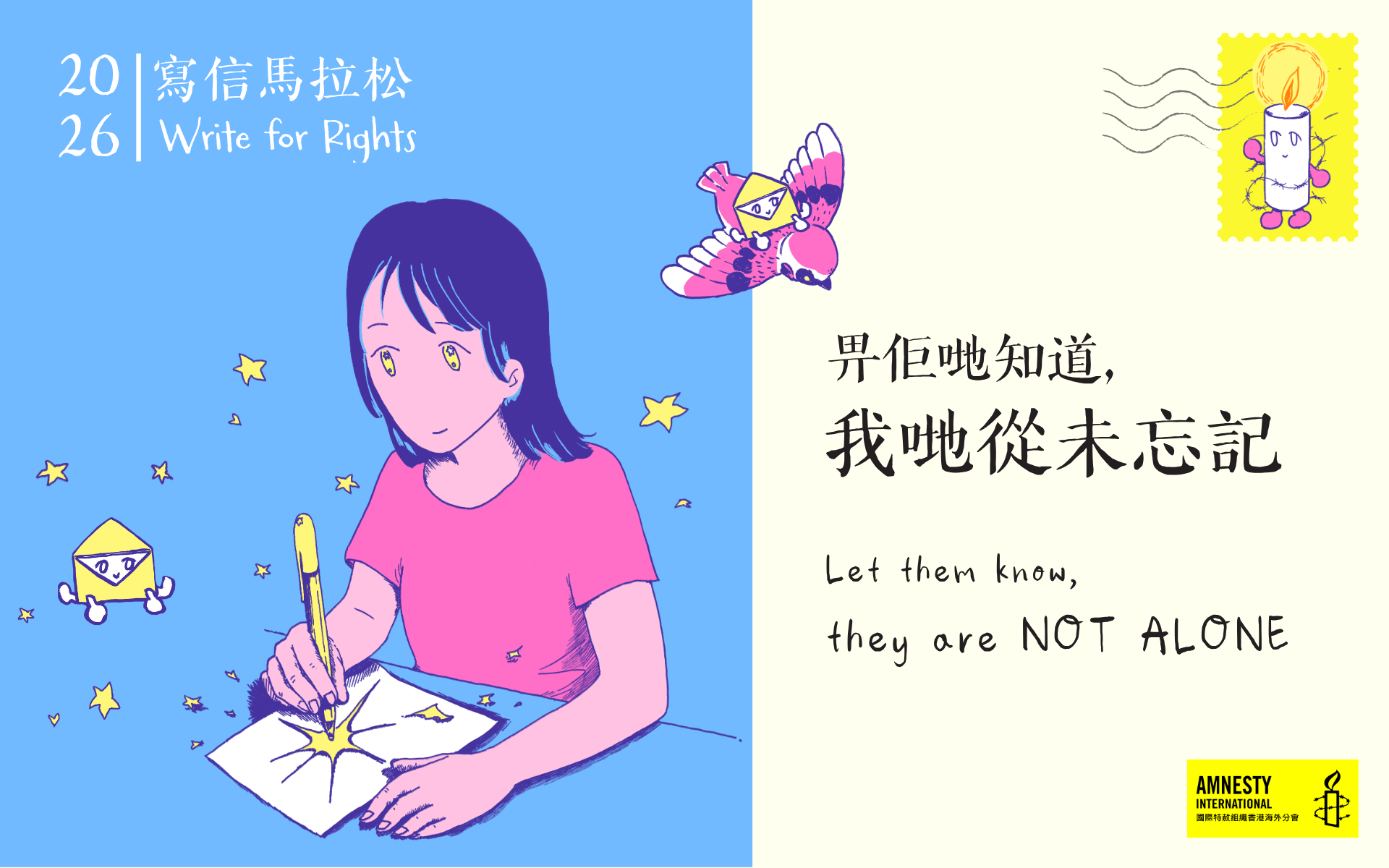
What is Write for Rights?
More than 20 years ago, a group of people came together for a 24-hour letterwriting marathon in support of people whose human rights had been violated.
That simple idea grew into Write for Rights, now the world’s largest annual human rights campaign.
Every year, people around the world write letters and sign petitions to put pressure on governments, leaders and decision makers, while showing care and support for people and their families.
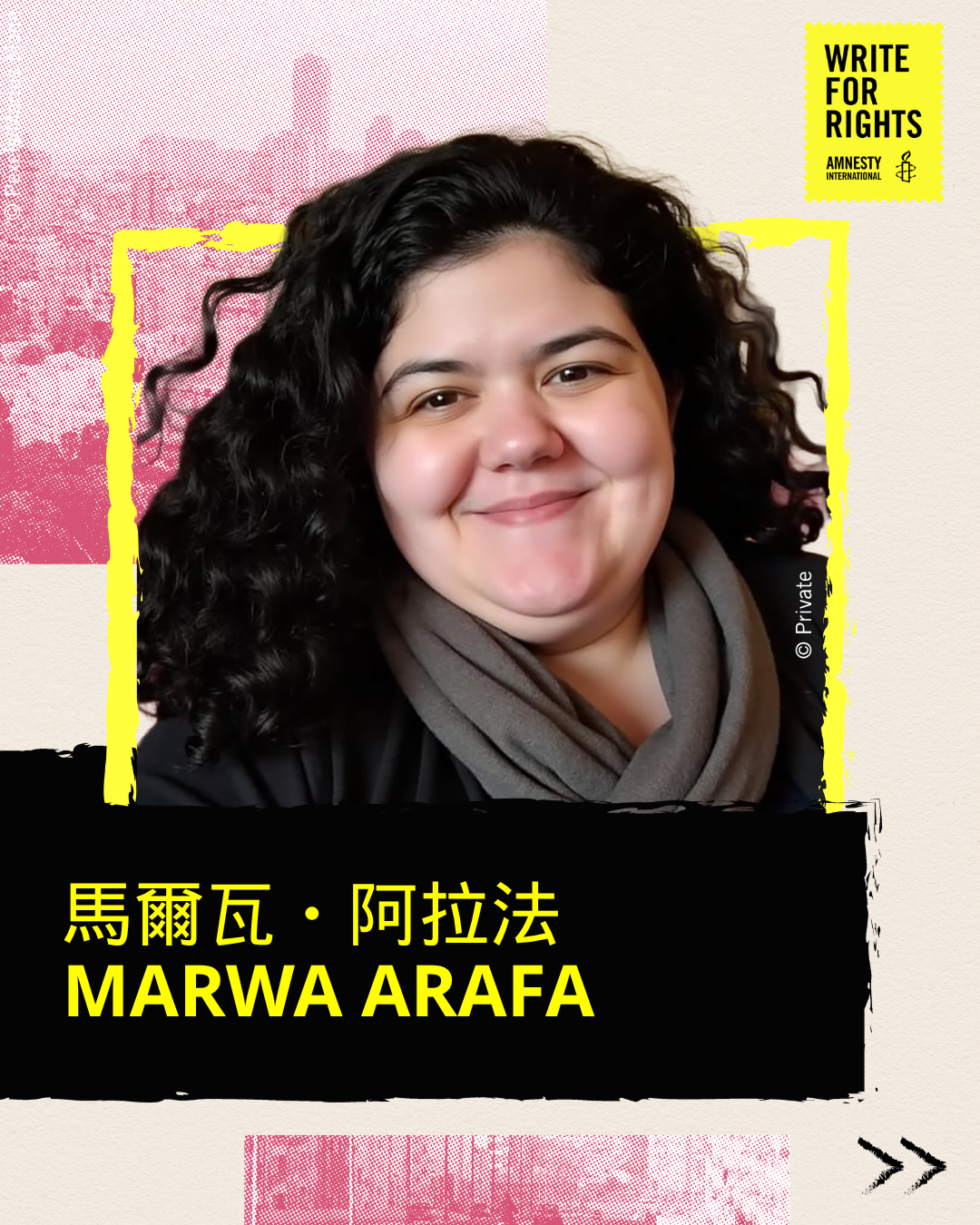
This year, we’re inviting Hongkongers around the world to write to three Hong Kong activists behind bars — Owen Chow, Gwyneth Ho and Leung Kwok-hung— and to human rights defenders in Pakistan, Russia and Egypt: Imaan MazariHazir and Hadi Ali Chattha, Daria Egereva, and Marwa Arafa.
Together, these actions have helped change the lives of more than 100 people — helping people regain their freedom, securing justice and protecting human
rights defenders so they can continue their work. A letter can be the start of
change.
HOW CAN YOU TAKE PART?
Join us and take action for human rights. There are many ways to take part in Write for Rights : write a letter on our website, attend an online or in-person event, learn about human rights together with your children.

Write Letters Now
Write a letter and take action for human rights.

Host an Event
Write letters with friends at your next gathering, or host a Write for Rights event in your community and invite others to take part.
- Register to receive the Letter-writing Guide
- Sign up for a online Write for Rights Information Session (Scheduled for December. Please follow our social media channels for updates.)

Write with Your Children
Write letters together and help children learn how their words can make a difference.
- Register to receive the Family Letter-Writing Guide
- Sign up for a online Family Letter-Writing Information Session (Scheduled for January. Please follow our social media channels for updates.)

Attend an Event
Find an event near you and take action with others.
- Join Write for Rights in Taiwan (Scheduled for December. Please follow our social media channels for updates.)
- Join Write for Rights in the UK (Scheduled for January. Please follow our social media channels for updates.)
- Join Write for Rights in Canada (Scheduled for February. Please follow our social media channels for updates.)
People You Can Write For
On 10 December 2026, Hong Kong’s Court of Final Appeal will hear the appeal of Owen Chow, Gwyneth Ho and Leung Kwok-hung against their convictions for “conspiracy to commit subversion.” Write to them now and show your solidarity!
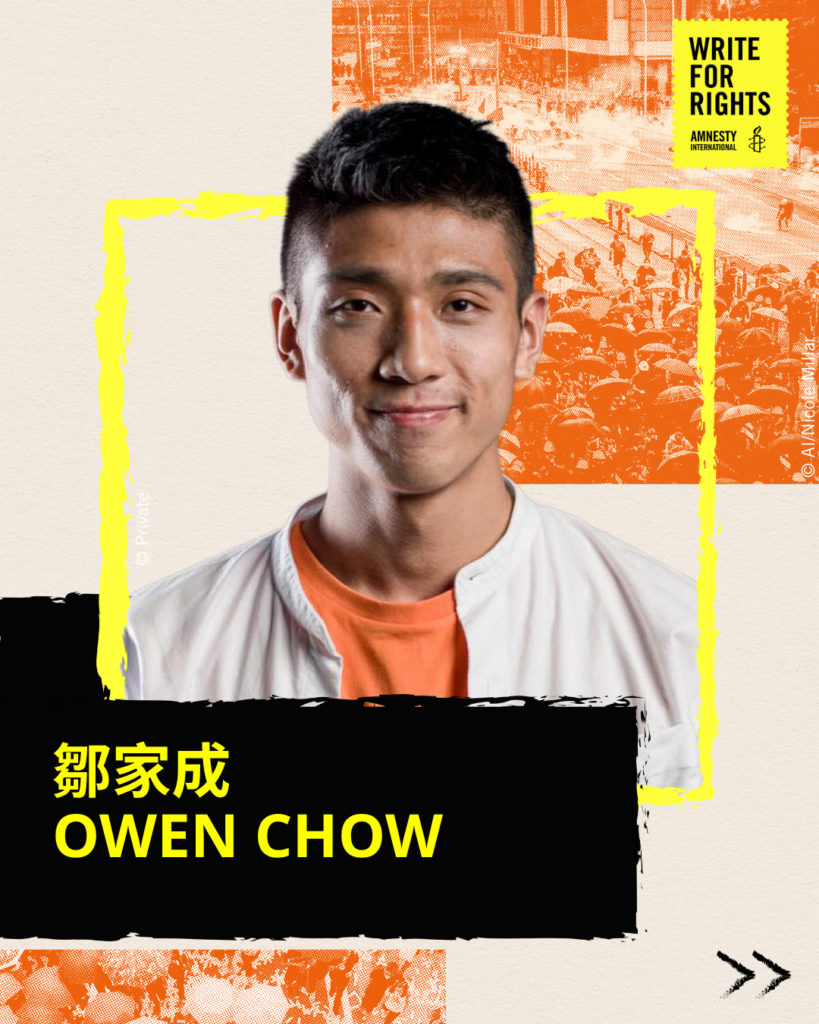
Described by friends as adventurous and philosophical, Owen Chow is a nursing student and practicing Tibetan Buddhist who has always wanted a dog.
At the age of 15, Owen joined his first pro-democracy march. He stepped into public life hoping to serve the underprivileged and build a fairer society. But speaking up has become dangerous in Hong Kong.
In 2020, Beijing imposed a draconian national security law on Hong Kong. As a result, the city has seen political opposition crushed, independent media silenced, and civil society organizations shut down.
Despite the risks, Owen fearlessly stood in unofficial “primaries” aimed at selecting candidates for upcoming elections when he was 23. In response, the authorities accused Owen and 46 others of conspiracy to commit subversion.
In 2021, Owen was arrested, and by 2024 sentenced to more than 12 years in prison. He may not be released until 2032 and has already spent at least three years in solitary confinement.
Owen’s story is one of many in Hong Kong. A city once known for open debate is now gripped by fear. People who once took for granted their right to speak up now no longer feel free to exercise their freedom.
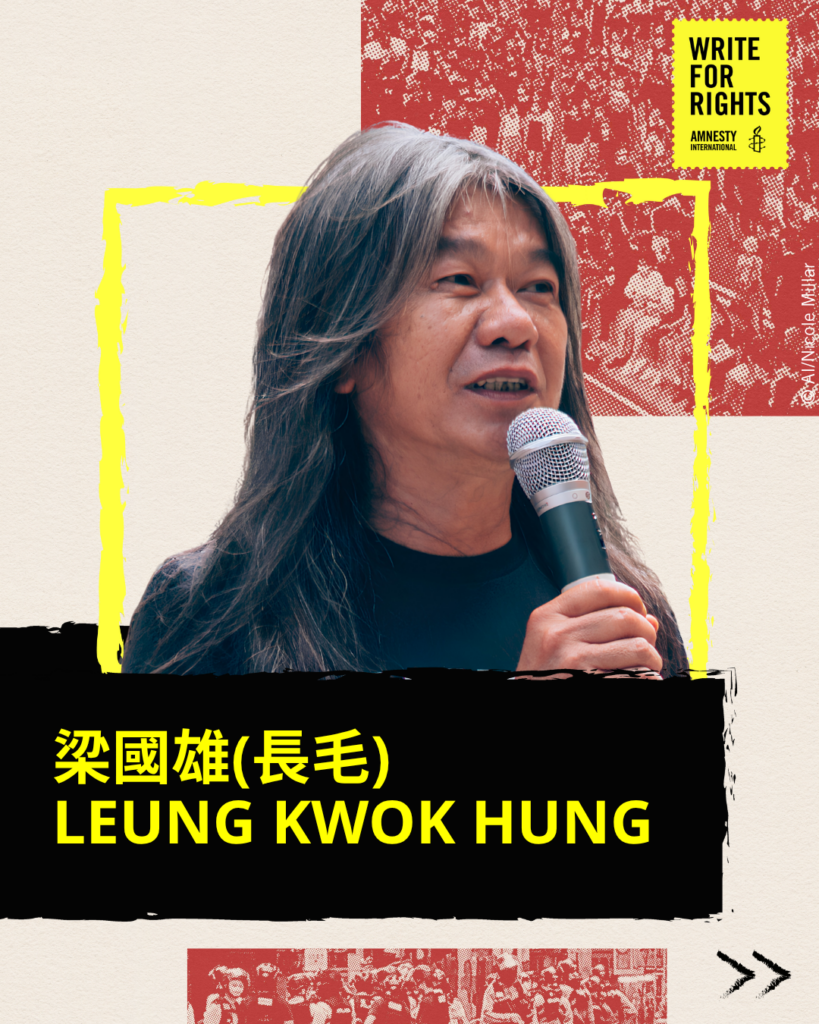
For Leung Kwok-hung, known across Hong Kong as “Long Hair,” “all power to the people” has never been just a slogan. It is the political conviction he has held for most of his life, and in his practice, fighting for democracy and defending the livelihoods of ordinary working people have always been the same struggle.
He was born in a fishing village in Shau Kei Wan. In 1979, he was arrested for his activism for the first time, outside a courthouse where he had come to support Yau Ma Tei boat dwellers seeking rehousing. Over the nearly five decades that followed, he was prosecuted and imprisoned again and again, yet he kept protesting in the streets and challenging the government through judicial review. His cases brought covert surveillance under legal limits and won prisoners the right to vote. He was elected to the Legislative Council five times, yet he continued to live in public housing and gave part of his legislator’s salary to social movements every month.
In 2021, he was arrested for taking part in the pro-democracy primaries for the Legislative Council and later charged with “conspiracy to commit subversion” under the Hong Kong National Security Law. He has been held in custody since March that year, and in 2024 he was sentenced to six years and nine months in prison. Now 70 and living with coronary heart disease, he remains behind bars, unable to continue the work he has devoted his life to. Yet through it all, he remains without bitterness or regret.
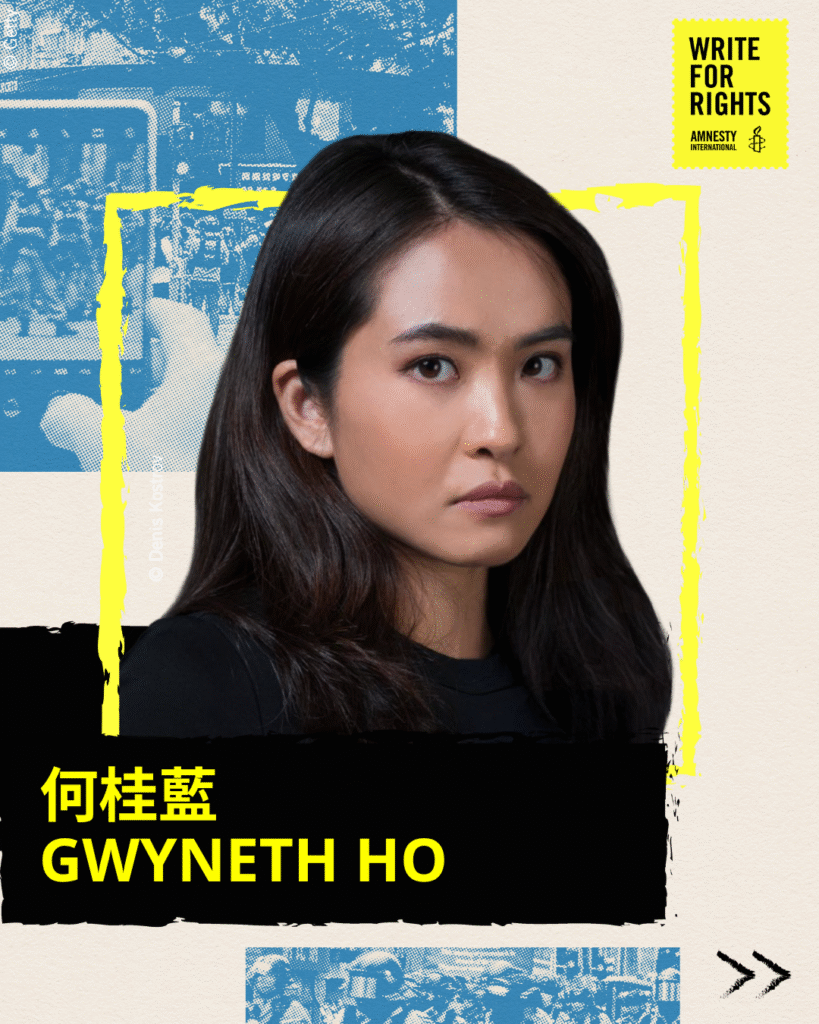
Gwyneth Ho once reported on Hong Kong’s social movements as a journalist, working for the BBC and the now-defunct independent outlet Stand News. She later set aside her press badge and became part of the movement herself.
On 21 July 2019, while livestreaming an attack by men in white shirts on members of the public in Yuen Long, she was herself beaten and injured. The following year, she left journalism to join the social movement, advocating for democracy and human rights. She was once sentenced to six months in prison for going to Victoria Park in 2020 to commemorate the anniversary of the Tiananmen crackdown.
In 2021, she was arrested for taking part in the pro-democracy primaries for the Legislative Council and later charged with “conspiracy to commit subversion” under the Hong Kong National Security Law. Denied bail, she spent 707 days in detention before her trial even began. She pleaded not guilty, was convicted in 2024 and sentenced to seven years in prison, and lost her appeal in February 2026. She is not expected to be released until 2028.
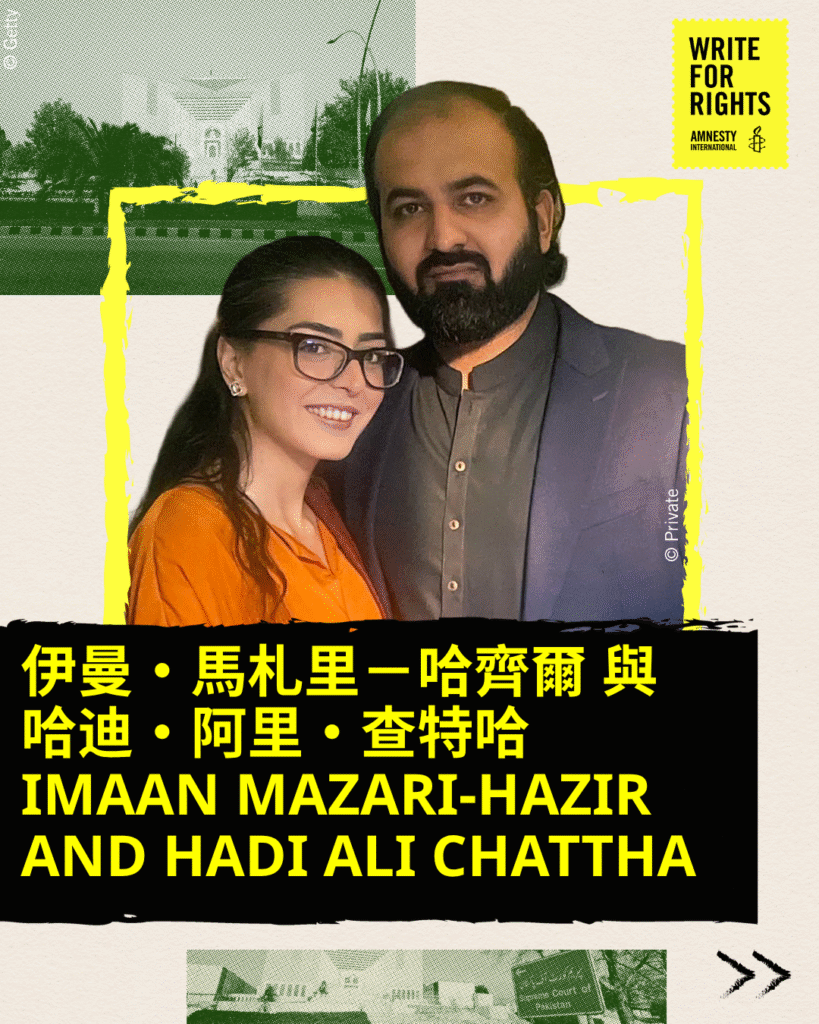
Imaan Mazari-Hazir and Hadi Ali Chattha are human rights lawyers. They are also a married couple in their thirties who met while representing a mutual client in court. When they’re not working long hours, they love eating out together and meeting up with friends.
The pair have dedicated their careers to representing victims of state oppression – something that is not without risk in Pakistan. Despite threats and harassment by the authorities, they bravely persisted.
Imaan said: “Not once have I considered stopping my advocacy work due to these threats. If you keep looking over your shoulder, it derails you from the cause and your detractors win.”
On 24 January 2026, Imaan and Hadi were given long prison sentences for their posts on social media expressing solidarity with Baloch and Pashtun activists and criticizing the Pakistan military. Their conviction reflects the Pakistani authorities’ use of the justice system to crack down on freedom of expression, by silencing critics and punishing lawyers to consolidate their power and control.
Imaan and Hadi should be doing their vital work and the things they love. Instead, they have been locked up and kept apart.
Daria Egereva has spent her life protecting people, culture and the environment. Born in Siberia and part of the Selkup Indigenous People – who number only around 3,500 – she trained as a teacher before becoming a respected advocate for Indigenous rights and climate justice. Friends describe her as warm, sociable and deeply compassionate. She loves reading and long walks outdoors, and often speaks about growing up in the taiga, surrounded by vast evergreen forests where she gathered berries with her family and built a lifelong connection with nature.
Today, Daria faces up to 20 years in prison for her peaceful human rights work. In December 2025, Russian authorities detained Daria and accused her of involvement with an Indigenous rights network they had labelled “terrorist”, even though her work focused on protecting Indigenous lands, languages and cultures.
Daria’s experience reflects a wider pattern in which accusations of “extremism” and “terrorism” are being used against activists, helping those in power silence independent voices and discourage others from speaking out. Yet Daria refused to abandon her values. Even when facing pressure and threats, she continued defending her people and their rights with courage and determination.
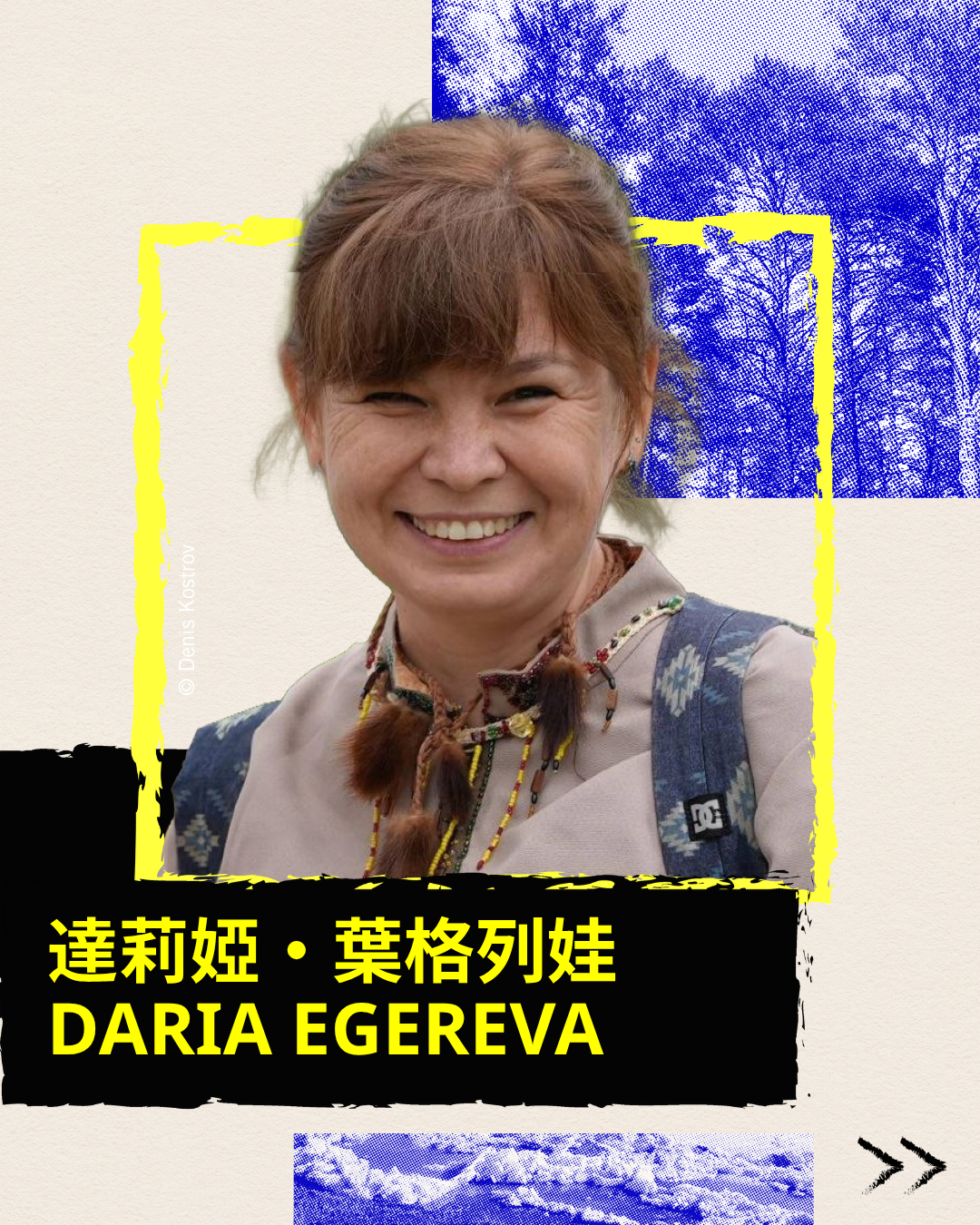
Daria Egereva has spent her life protecting people, culture and the environment. Born in Siberia and part of the Selkup Indigenous People – who number only around 3,500 – she trained as a teacher before becoming a respected advocate for Indigenous rights and climate justice. Friends describe her as warm, sociable and deeply compassionate. She loves reading and long walks outdoors, and often speaks about growing up in the taiga, surrounded by vast evergreen forests where she gathered berries with her family and built a lifelong connection with nature.
Today, Daria faces up to 20 years in prison for her peaceful human rights work. In December 2025, Russian authorities detained Daria and accused her of involvement with an Indigenous rights network they had labelled “terrorist”, even though her work focused on protecting Indigenous lands, languages and cultures.
Daria’s experience reflects a wider pattern in which accusations of “extremism” and “terrorism” are being used against activists, helping those in power silence independent voices and discourage others from speaking out. Yet Daria refused to abandon her values. Even when facing pressure and threats, she continued defending her people and their rights with courage and determination.
Write a letter online
If you want to upload a letter with attachments, photos, handwritten letters, or drawings, please use the “Upload Your Handwritten Letter” option instead.